It's taking longer to download than it was to puke up
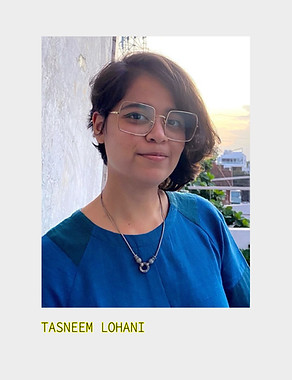
TASNEEM LOHANI
9 April - 16 May, 2026


It's taking longer to download than it was to puke up
In an era of pervasive digitality, networked software has become embedded in the infrastructure of everyday life. Accessed through black mirrors of varying sizes, it now permeates the basis of human interaction, generating a paradoxical condition in which the presence of others can be continuously felt while one remains alone. Underlying these interactions is a networked logic composed of links and nodes, structured through vectoral mapping and visualization of a shared connectivity. Flickering lights on these glass surfaces, along with icons, buttons, notifications, and many more user interface elements, are built to map behavioral patterns and engineer sustained engagement. Lohani’s work dissects this imagery and its underlying infrastructure that has influenced our perception and how we relate to the world. Her work in the show takes the form of an installation that reconstructs her childhood basement computer room. An interior space populated with fragments of domesticity, inviting tactile exploration. The space returns to Lohani’s adolescent encounters with social media, where a new form of conversational etiquette was learned through interface. Particularly looking at Facebook’s design as it quietly structured interaction: when to respond, how to signal presence, what to reveal, and what not to reveal. “are you der?” unfolds as a conversational soundscape, experienced while lounging on beanbags, composed from Lohani’s early Facebook Messenger texts. Sourced from a private archive of exchanges with strangers and friends from fifteen years ago, the messages persist within Facebook’s database and were retrieved through a data request in 2023. The conversation critically looks at their interaction with the latest features of the application. As they navigate social structures online and offline through their adolescent years, these conversations bear witness to the techno-anxieties that emerged. She recalls a time when the internet functioned as a nocturnal inhabiting space, a hangout where strangers became friends. Here, immediacy loosens into latency and anticipation, signalled by the flicker of typing indicators. Within these pauses, platforms offered misfits and outcasts a fragile promise of community and self-expression. This shift in mode of communication allows what may be understood as stranger sociality, a form of interaction structured by distance, anonymity, or limited familiarity. A free open space of possibilities where one could construct one’s identity anew amongst strangers. Fragments of early social media reappear in the installation in the form of holographic poked stickers, referencing Facebook's “poke” icon, a digital nudge prompting a response in an unfamiliar digital environment. A feature that Mark Zuckerberg admittedly thought of while drunk, a game-like online interaction that seems deceptively playful and breezy. The installation foregrounds the ambivalence of these interfaces. While buttons and gestures appear harmless, even playful, their effects are not neutral. The “poke,” created as a joke, became a site of discomfort and harassment, enabling unsolicited advances from men toward women beyond their friend networks. It reveals how platform design can produce asymmetrical social dynamics while evading accountability. Even moments of disconnection are designed: the Chrome Dino game appears on the Chrome web browser when the internet fails, reabsorbing absence into engagement, nudging for a few more minutes of engagement. Lohani questions our relationship to algorithmic engagement by altering the code of the original game. The game offers endless life, sustained only through continued play, as players exchange their time for incrementally higher scores. Alongside these digital traces, drawings on the wall introduce another mode of communication. Abstract mark-making echoes her attempts at self-expression, positioning bodily gestures as a parallel to digital inscriptions. Across the installation, Lohani holds in tension the network’s dual conditions: the somatic and cognitive, the user and software, the human and nonhuman. When on-line, the body not only senses but produces. Its gestures—scrolling, tapping, swiping—are continuously archived and systematically fed into the network’s logic. What happens when one’s emotional life shared online becomes a data entry? And what becomes of friendship when its infrastructures are designed to extract economic value from it? When one’s digital intimacy is translated from information to profit, the terms of sociality shift. The techno-capitalist interface has seeped into the very structure of communication, rendering us constantly susceptible to biases embedded within software. In the times when one can befriend an agreeable AI, Lohani does not attempt to resolve contradictions. Instead, she invites a return to memories of early encounters with the internet, to the desire for connection that shaped them and asks to re-consider our relationship with these systems now. – Oorja Garg Oorja Garg is a curator currently based between New York and New Delhi. Her practice moves between research, exhibition-making, and critical writing, foregrounding speculation, archives, and play as curatorial methods. She examines how contemporary art engages science fiction, games, and popular culture to question dominant narratives of technology, identity, and history. Garg holds dual master’s degrees in Curatorial Practice from the School of Visual Arts and in Art History from the MS University of Baroda.
Tasneem Lohani
Tasneem Lohani is an artist, curator, writer and educator working across sound, video, and drawing on paper and textile. Her practice reflects on the impact of techno-capitalism, digital communication systems and software on the human psyche. She examines how these largely Western-designed digital systems materially affect mental health, bodily awareness, and ecological relationships in Indian societies, disrupting existing forms of knowledge-making and social organisation.
She holds an MFA (2020) from Kingston School of Art, London and held her first solo show at the Cholamandal Artists' Village (2018). She was an artist in residence at ZiMMT, Leipzig as part of BangaloREsidency-Expanded 2022 supported by Goethe-Institut Bangalore. Most recently she showed her work at ‘As Tranquil As Can Be’ curated by Raqs Media Collective for Serendipity Arts Festival (2025), ‘Lateral B(l)inds’, an Immerse Fellowship alumni exhibition and India Art Fair Parallel exhibition curated by Satyam Yadav at Vis A Vis India / STIR, New Delhi (2024), ‘Feralpy’ at Flux Factory New York, USA (2023), as well as at the first Immerse Fellowship exhibition (2022) at Somaiya Vidyavihar University, Mumbai.
She co-founded The Artist Society Collective (2021, ~formerly Sizzle Lyk Dat Studio) under which she hosts The Artist Society Podcast, an artist-run podcast from India. She has curated multiple exhibitions including 'Now That The World is Ending, Let's Get Together' at 1.Shanthiroad Gallery, Bangalore for The Wrong Biennale 2021/22 and ‘I Don’t Want To Die Alone’ at Stanley Picker Gallery, London (2020) to name a few. She has taught at Karnataka Chitrakala Parishath, Bangalore, NIFT Bangalore and is currently serving as a Curriculum Developer for Color Ashram's new course on sustainable art and textile in Mysore.